Slow work
How do you "optimize?" what is "optimization," anyway?

I take too long. For writing, making pots, thinking. Everything is a slow process for me, somehow. I can be quick on the wheel—throwing and trimming. But decorating work takes me forever, for some reason. Drafting can be quick, or maybe editing is quick, or maybe neither of them are. I am in a between place, right now. Waiting on edits, waiting to figure out where I might be working next fall. Waiting for pots to come out of the bisque kiln. There is a lot of waiting, lately. And slow making of work.
I cannot watch the news. It’s not that I don’t know about what’s happening. I know too much about what’s happening. But I have to limit my exposure. Because otherwise I will not write or make art at all.
Ori has a lot of ideas about this problem, the slowness. I make my feelings—joy, anxiety, obsessiveness—in cup form. But the fact that joy is made of shards, requires a certain kind of inane attention to detail, and takes hours to finish a single cup is probably a metaphor somewhere. “Joy should be easier,” Ori says. I need to be better about standardizing the work: both in writing and in everything else. I am working on a novel, lately. It’s good. It is a place where I can go, a thing I can do. I cannot talk about it with you, but I am accumulating pages, about to swap with a friend. It’s like that, somehow, this work. Accumulating.
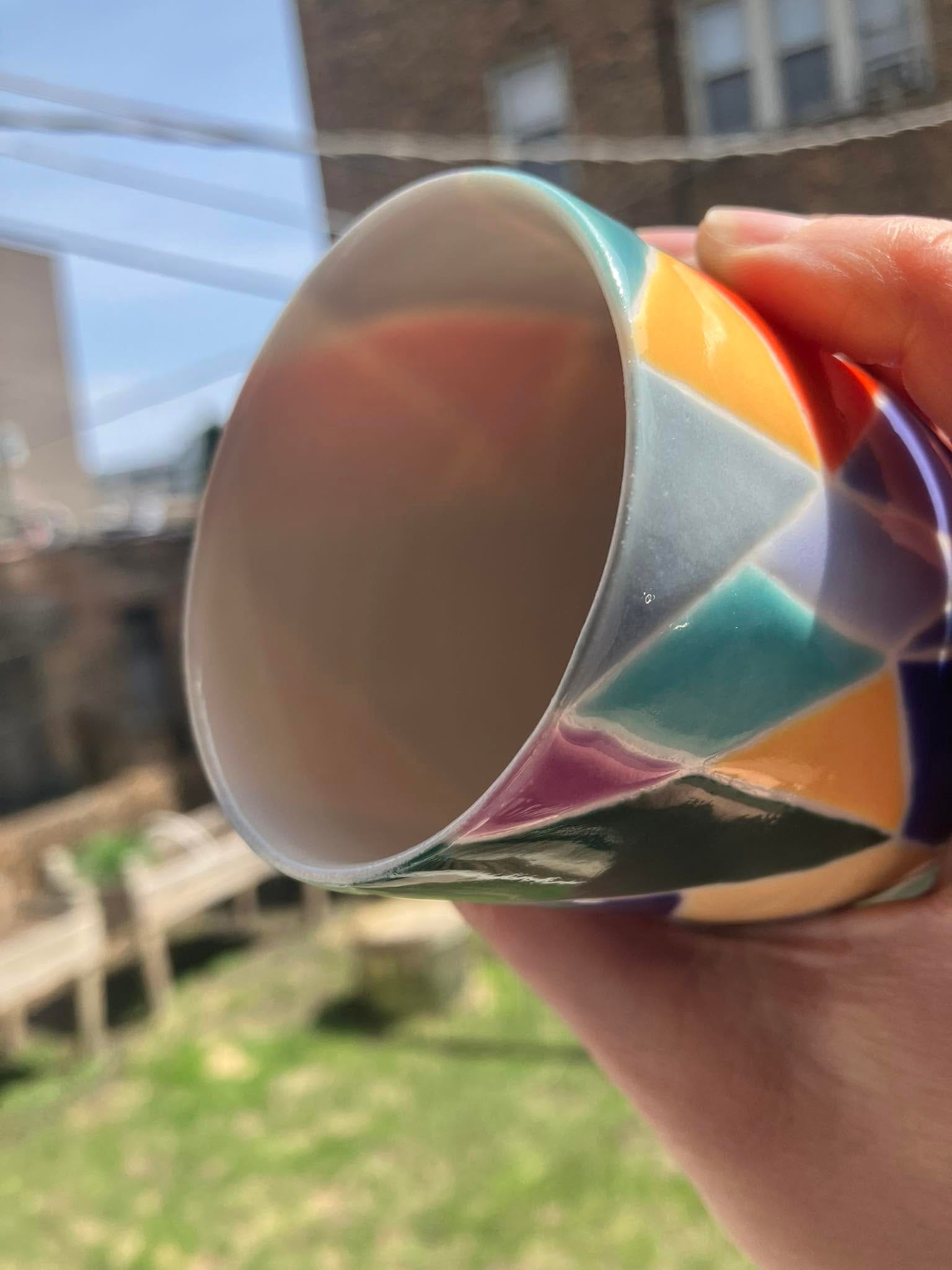
But the other work: writing essays, of which I am reminded at least one is due to a literary magazine (sorry Paul/VQR), is slow. And making the memoir is slow too. And making cups is also slow. I want to be smarter about things, move more quickly, spend less time polishing an individual object. I should have more books, more cups, more work done by now. There are a few problems.
One is that I try to obsess over each word before I fix the next word. I’ve talked about this before: per Anne Fadiman, you are either a swamp driver or a diamond polisher. Swamp drivers drive back and forth across the swamp, accumulating pages that they then cut down. Or if you’re a diamond polisher, like me, every word has to be perfect before you get to the next word. I try to not do this in the substack, but then that sometimes means I’m sending out ideas that are half-baked, not fully realized. The novel feels more unhinged, freer somehow. So I can find momentum that way. Especially since I haven’t sent pages to anyone yet.
I think also, of course, there is the time spent on instagram, or facebook, endless scrolling. I like that when I am at the studio, making things, I cannot be online. I have to be reminded to take photos, because usually my hands are full of clay. I am rereading How to Break Up With Your Phone (revised edition) because my brain is popcorn these days. I know I need to get off the internet. But I also know that I have to simply use it better, whatever that means. I have to plan my usage. Stay focused. Make the substack posts, or post on IG or facebook, and then get offline. I need fewer tabs, my phone in grayscale. All the tricks.
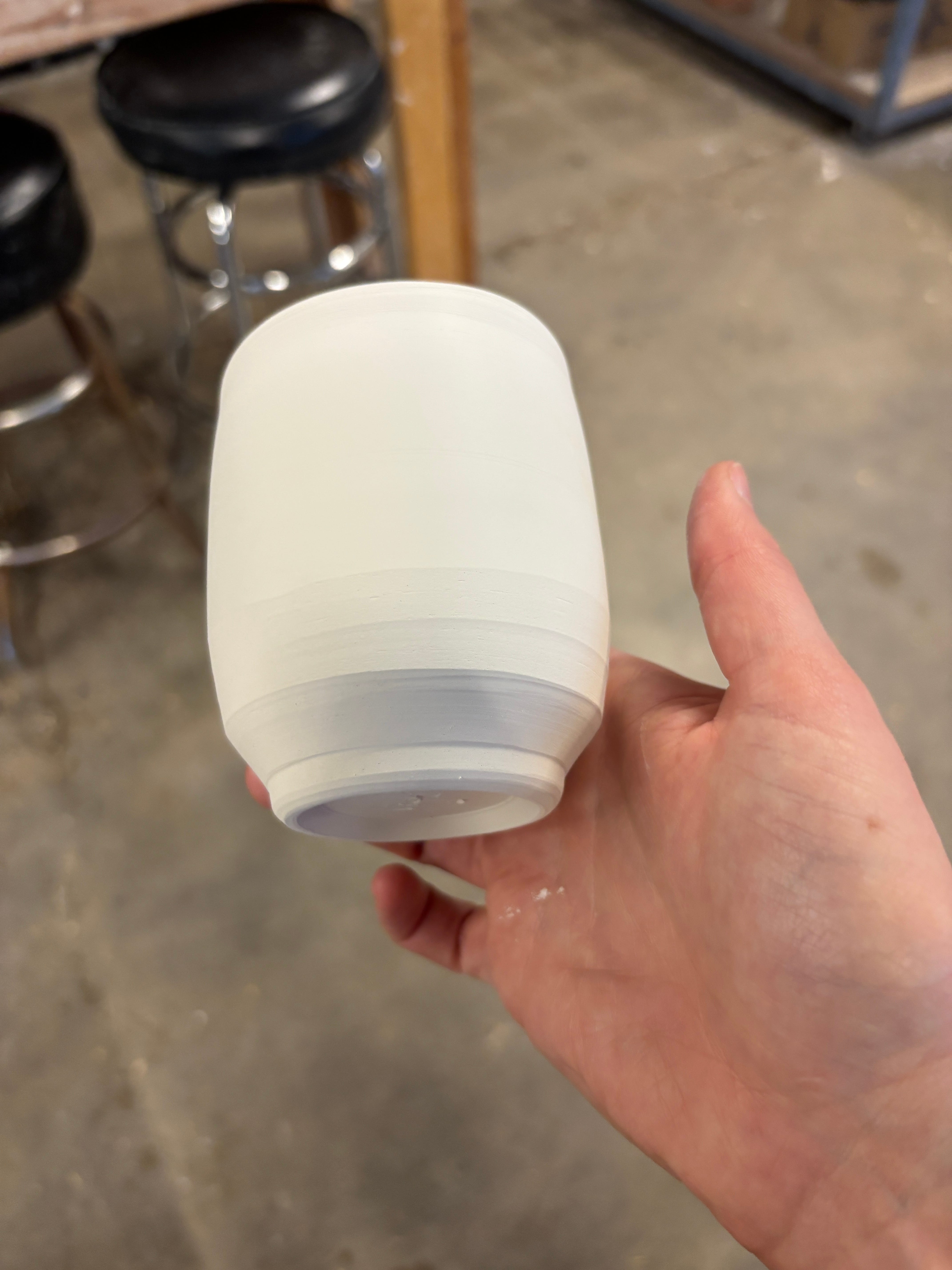
But the pots, even offline, are still slow.
Here’s the pottery problem: I need to be slipcasting my work. To slipcast means you make a mold, usually plaster, and pour liquid clay into it (slip) and then let it dry a little before popping it out of the mold. It’s a way of making many of the same shape. That means I can spend more time decorating, or be less obsessive in my trimming, or just finish pots more quickly. I used to be better about this: I would just dip work in whatever glazes I’d made, then throw them in the kiln and hope for the best. I used to have 25 recipes for copper red. Now I’m more into surface decoration, and so I need to spend less time throwing. It’s a potter’s calculus. It’s why some people end up making dinnerware and other people make one-off pieces. There’s no in between, no matter what I want. I can’t make one-offs and spend a ton of time decorating and also standardize the pieces I make all at once.
Also, there’s the problem of my hand. I had surgery in December, followed by months of hand therapy. I asked my surgeon to make sure my hands matched: I am hypermobile in my hands, and I need both of my thumbs to work the same way. He refused, and so now I have one hand with limited mobility and the other one with my regular range. I am making some progress, for sure. But throwing is painful, particularly opening clay with my thumbs, after centering, and I can’t do what I could do before. So I might have to change how I interact with the work entirely. Enter slipcasting. Maybe. I’ll report back.
Love you, my friend. And grateful to witness? particpate in? your unique process!! Cheers to accumulation!
So much relating